
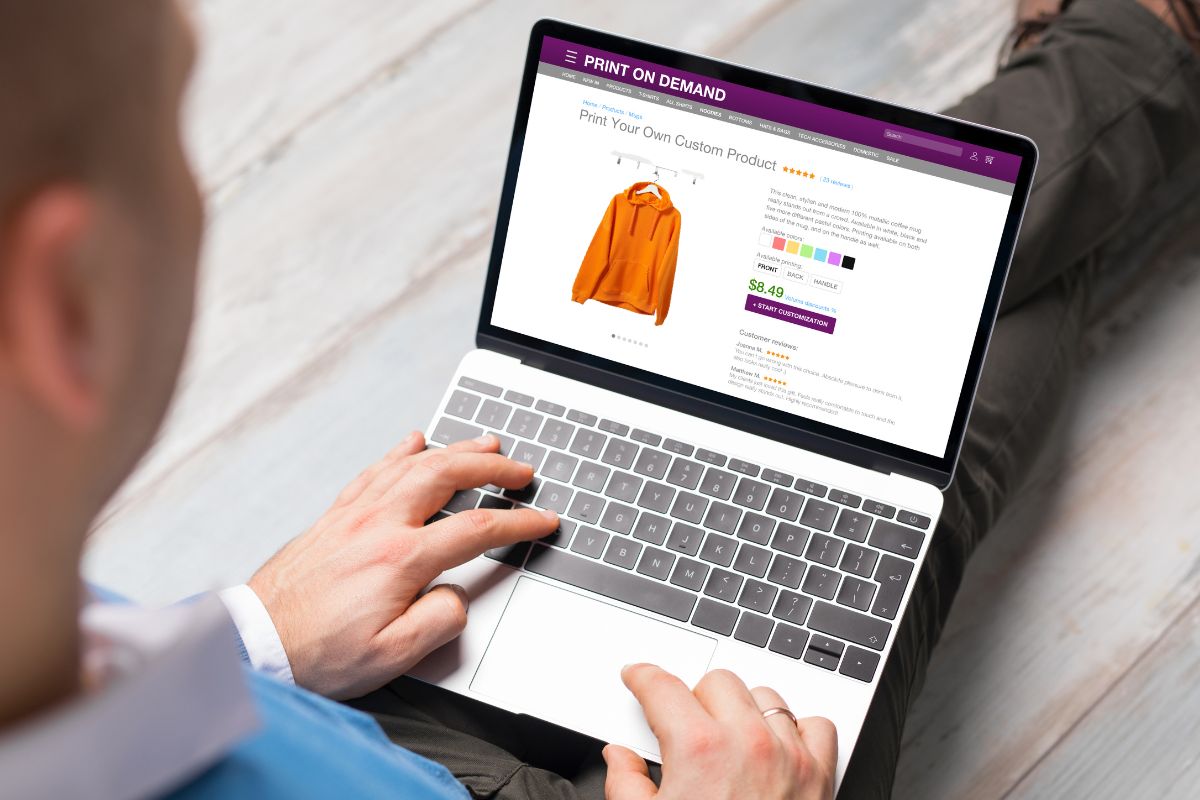
Most new sellers ask the wrong margin question first. The real question is whether a Print on Demand store can survive ads, refunds, shipping surprises, and slow repeat orders after the supplier gets paid. POD usually wins on low cash risk and loses on unit economics. Wholesale, private label, dropshipping, handmade goods, and digital products can all beat it on margin, but each one brings a different kind of pressure.
That matters for local American sellers who start with $300, a Shopify trial, an Etsy shop, or a small audience from TikTok. A small brand comparing channels, content, and partnerships can use practical market visibility to make smarter decisions before pouring money into ads. The margin that looks good in a spreadsheet may collapse once you pay platform fees and customer acquisition costs. The best model is not the one with the biggest markup. It is the one where your cash, time, product quality, and repeat buyers line up.
How Print on Demand Makes Margin Math Feel Safer
POD feels friendly because it removes the scariest part of retail: buying stock before anyone wants it. You can test a design for dog moms in Ohio, pickleball dads in Arizona, or nurses in Texas without stacking boxes in a garage. That freedom has value. It also has a price, and the price shows up inside every order. Think of POD as margin insurance. You pay more per unit so you can avoid dead stock, storage, packing supplies, and a spare bedroom full of unsold mugs. That trade can be smart when you are still learning what buyers want. It also gives a cautious owner room to test designs around holidays, local events, and small subcultures without betting a month of rent. It gets dangerous when you treat low startup cost as proof that the business is cheap to run.
Why low startup cost can hide thin unit profit
A seller may see a hoodie sell for $52 and feel rich for an hour. Then the supplier charges for the blank, print, packing, and shipping. The platform takes its fee. The payment processor takes a slice. If the customer came from a paid ad, another chunk leaves before the order settles.
A simple example makes the picture clearer. Say a U.S. seller prices a niche hoodie at $52. The supplier cost plus shipping lands near $34, and selling fees take another $3. That leaves $15 before ads, returns, discounts, and support time. The order looks healthy until a $10 ad click path produces one sale. Now the owner has $5 and a customer who may never return.
This is why POD profit margins need a sober reading. Gross margin is not owner profit. It is the room you have left to make mistakes. The seller who treats that room as spending money runs out of oxygen fast. The same trap appears with free shipping. Many shoppers expect it, so the seller folds shipping into the price. That can work, but it changes the buyer’s price ceiling. A $28 shirt may feel fair. A $36 shirt may need sharper art, better photos, a gift angle, or a stronger brand story to earn the click.
Where POD profit margins break first
The break usually starts with paid traffic, not product cost. A niche shirt can carry a decent markup, but Facebook, Google, TikTok, and influencer fees do not care that you started small. A campaign can eat the entire order profit while still looking “successful” inside the ad dashboard.
The counterintuitive part is that a higher product price can hurt less than a cheaper one. A $19 shirt may feel easier to sell, but it leaves little room for acquisition. A $39 premium shirt with sharper artwork, a clear identity, and a gift-ready angle may convert fewer people yet produce better online store profitability. Cheap can be expensive.
Before you pick products, build your small business pricing strategy around contribution profit, not hope. Add the supplier cost, shipping, platform fee, payment fee, average discount, and expected ad cost. The remaining number tells you whether the model can breathe. A safer POD store also watches product mix. Stickers, posters, caps, mugs, and shirts do not behave the same. Some products win because they are cheap impulse buys. Others win because buyers see them as gifts. Margin planning should start with the buying reason, not the catalog page.
Why Other E Commerce Models Can Look Richer on Paper
Once a POD seller sees the supplier taking the largest share, other e commerce models start to look tempting. Buying inventory can drop the per-unit cost. Dropshipping can offer a larger catalog. Digital products can carry high margins after production. Those advantages are real, but they do not arrive alone. The mistake is comparing only the line labeled “cost of goods.” A private label product may look far better at that line, yet it brings freight, inspection, packaging, storage, shrinkage, and markdown risk. Dropshipping may look easy, yet the store owner may have little control over delivery speed. Every model hides its pain in a different place. The seller’s job is to find that pain before money leaves the account, because the best-looking model on paper can be the one that creates the most pressure at home.
Inventory can create better unit economics and worse sleep
Wholesale and private label selling often beat POD on cost per item. If you order 500 stainless steel tumblers from a supplier and brand them yourself, the landed cost per unit may sit far below an on-demand version. That spread gives you more room for ads, bundles, free shipping, and wholesale accounts.
The friction is cash. You pay before demand proves itself. Then you pay for storage, samples, damaged units, packaging, and slow movers. A seller in Florida might buy beach-themed drinkware in March, miss the summer trend, and carry the same boxes into October. The spreadsheet still shows strong gross margin. The garage tells a different story.
This is the hidden trade. Inventory improves the unit, but it weakens flexibility. POD keeps flexibility high and unit profit lower. Neither path is automatically smarter. The better choice depends on how well you can predict demand. A bulk order also changes your emotions. When you own 500 units, you may run discounts too early because you want relief. You may keep a weak product alive because admitting the miss hurts. That human side rarely appears in margin calculators, yet it shapes real decisions.
Dropshipping trades warehouse risk for supplier control
Dropshipping sits between POD and inventory retail. You do not hold stock, but you sell products a supplier already carries. That can make testing easier, and some categories have appealing markups. The issue is sameness. Ten stores may sell the same lamp, pet brush, or kitchen gadget with the same photos.
Customers notice when the experience feels thin. Long shipping windows, uneven packaging, and weak product knowledge can hurt trust. A U.S. buyer who waits two weeks for a common gadget may blame your brand, not the supplier. You own the complaint even when you never touched the product.
For wider market context, the U.S. Census Bureau retail e-commerce reports track online retail as a serious part of American shopping, not a side channel. That makes competition harsher. Among e commerce models, dropshipping can win on speed of setup, while POD can win on originality when the design speaks to a tight audience. Digital products deserve mention here too. Templates, guides, spreadsheets, presets, and courses can carry high gross margins because delivery costs little after creation. Still, they demand trust. A stranger will not buy a $49 planner because the file is cheap to send. They buy because the seller proved taste, skill, or a clear outcome.
The Real Comparison Is Cash Flow, Not Markup
A margin percentage can trick you because it leaves out timing. One model gives you lower margin but pays after every order. Another gives you higher margin but locks cash inside stock for months. A third looks beautiful because the product cost is tiny, yet it demands months of content before buyers show up. Cash flow is where small sellers learn humility. Rent, software, samples, ads, refunds, and taxes move on a calendar. Your profit forecast does not. A model with lower margin but faster feedback can keep you alive long enough to learn. That matters more than sounding impressive in a founder group.
A good margin can still create a bad month
Think about a seller who clears $12 on each POD mug after costs. She sells 80 in December, so the gross picture feels decent. Then January brings returns, a slow ad account, and a supplier delay on one popular design. Cash drops before the next winning product appears.
Now compare that with a small private label seller who clears $20 per unit but had to spend $4,000 upfront. The profit per sale is better, but the payback clock keeps ticking. If stock moves slowly, the seller may discount hard to recover cash. The larger margin becomes less useful when money sits trapped on a shelf.
POD profit margins deserve comparison against cash recovery, not ego. A thinner margin that resets daily can beat a larger margin that sleeps in unsold units. That is not glamorous. It is how small sellers stay alive. Taxes add another quiet layer. A seller can feel profitable in April, spend too freely in June, then face sales tax, income tax, and bookkeeping cleanup later. The model did not fail. The cash plan did. Good margin math leaves space for obligations that do not feel urgent when orders are coming in.
Customer acquisition decides the winner
For most U.S. sellers, the hardest cost is not the product. It is getting the right buyer to trust a store they have never seen. That is why e commerce customer acquisition costs should guide the model choice before branding, themes, or product names.
POD works better when the seller has a built-in audience or can create content around identity. A gym coach selling inside jokes to local lifters has an edge. A teacher with a classroom humor account has an edge. A random store selling “funny shirts” to broad America has no edge at all.
The non-obvious lesson is simple: the best margin may come from the cheapest customer, not the cheapest product. A digital planner with a 90% gross margin can fail if every sale costs $18 in ads. A POD cap with a thinner spread can win if a loyal newsletter buys it from one email. This is why content-led brands often beat ad-only stores. A local pickleball page, a barber with a loyal Instagram following, or a parenting blogger can sell a small run without buying every visit. The product margin may look average. The acquisition cost makes the business work.
When POD Beats, Matches, or Loses to Other Store Types
The smartest comparison is not POD versus everything else. It is POD for the right job versus the wrong job. Some sellers need proof before stock. Some need premium control. Some need a product that ships in seconds. The model should match the stage of the business. A useful test is to ask what would hurt more: missing a trend or carrying dead inventory. If missing the trend hurts more, inventory may fit once demand is proven. If carrying dead inventory would break the budget, POD gives you room to test. The answer can change as the store grows. A first-year seller may need low-risk experiments, while a third-year seller with steady buyers may need lower unit cost and tighter control. Treat the model as a stage decision, not a personality.
POD wins when testing and identity matter
POD is strong when the product depends on taste, timing, or community language. A shirt for Detroit marathon runners, a tote for Austin plant lovers, or a poster for new homeowners in Denver can test demand without a risky order. If the design fails, you lose time and maybe a small ad budget, not a pallet.
It also helps creators turn attention into revenue without becoming warehouse managers. A small YouTube channel, local newsletter, podcast, or niche blog can add merchandise and learn what the audience values. The first goal is not maximum margin. The first goal is proof.
Here is the quiet advantage. POD can reveal what deserves inventory later. When one design sells every week for months, the seller can move that item to bulk production and keep the rest on demand. The model becomes a research lab, not the final business. The best signals are repeat orders, low refund rates, organic comments, and buyers asking for related products. Those signs matter more than one viral weekend. A viral spike may flatter the owner. A boring product that sells every week teaches more.
POD loses when control and repeat purchase matter more
POD struggles when customers expect a polished product experience. Beauty, supplements, premium home goods, and specialty gear often need packaging, inserts, quality checks, and repeat buying cycles. In those categories, private label or owned inventory can create better brand memory.
It can also lose when shipping speed matters. A gift buyer in Chicago who needs a birthday item by Friday may choose Amazon or a local store. If your supplier cannot meet that window, your design quality may not save the sale. Online store profitability depends on the whole purchase, not the product page.
The best operators treat POD as one tool. They test with it, keep slow sellers on it, and move winners into inventory when demand proves steady. That blended path beats the false choice between low-risk and high-margin selling. One practical rule helps. Keep uncertain designs on demand, bulk-order proven designs, and reserve custom packaging for products that buyers reorder or gift. That way, the business earns its complexity. You do not add operations because a guru said real brands hold inventory.
Conclusion
Margin is not a beauty contest. It is a stress test for how your store handles cash, attention, supplier limits, and customer trust. A Print on Demand model can be the right first move because it lets you test ideas without heavy stock risk, but it will punish lazy pricing and broad targeting. Other models may offer richer unit economics, yet they ask for cash, storage, forecasting skill, and tighter operations.
The stronger path is to match the model to the stage. Use POD when you need proof, speed, and niche learning. Move into inventory when sales repeat enough to justify the risk. Keep digital or service-based offers in mind when your audience wants knowledge more than products. Do not chase the model with the prettiest margin chart. Build the one your buyers, budget, and patience can support. Review one product at a time, then decide whether it belongs on demand, in inventory, or outside the store entirely. Start with one product math sheet today, and let the numbers argue before your wallet does.
Frequently Asked Questions
How much profit can a POD seller make per product?
Many sellers aim for a clear dollar profit after supplier cost, shipping, platform fees, and payment fees. A $30 item that leaves $8 before ads may work with organic traffic but struggle with paid traffic. The useful number is contribution profit, not list price markup.
Is POD better than dropshipping for beginners?
POD often suits beginners who want original designs and lower product risk. Dropshipping can offer more items faster, but many stores sell the same goods. A beginner with strong niche ideas may find POD easier to brand, while a skilled product researcher may prefer dropshipping.
Which e commerce model has the highest margins?
Digital products often have the highest gross margins because delivery cost stays low after creation. That does not guarantee profit. Course, template, and download sellers still need trust, traffic, support, and refunds under control before the margin becomes money.
Why do POD stores fail even when products sell?
Sales can hide weak math. Supplier charges, shipping, ad spend, refunds, discounts, and platform fees can drain the order. A store may celebrate revenue while keeping little cash. Weak audience targeting makes the problem worse because every customer costs more to reach.
What products usually have better POD margins?
Premium apparel, wall art, stickers, niche posters, and personalized gifts often have better room than common basics. The real margin depends on perceived value. A plain mug competes on price, while a sharp gift idea can sell for more without feeling overpriced.
Should I start with POD before private label?
That can be a smart path when you want demand proof. Use POD to test designs, messages, and buyer groups. If one product keeps selling without heavy discounts, you can price out bulk production later and protect cash from early mistakes.
How do ads affect POD profit?
Ads can turn a decent margin into a tiny one fast. If a product leaves $12 before marketing and one sale costs $9 in ads, only $3 remains before support or refunds. Organic traffic, email lists, and repeat buyers make the model healthier.
What is the best way to compare POD with other models?
Compare cash needed upfront, profit per order, time to delivery, customer acquisition cost, repeat purchase chance, and supplier control. A model with lower gross margin can still win if it tests faster and loses less money during bad experiments.